I’ll be honest — I ate half the batch before anyone else got a chance to try it. It all started on a rainy Tuesday when I was staring at a half‑empty fridge, a stubborn craving for something that felt both comforting and exotic, and a dare from my roommate: “Make something that could win a culinary showdown without breaking a sweat.” I threw together a few leftover grains, a couple of salmon fillets that were begging for a makeover, and a handful of Mediterranean veggies that had been languishing in the crisper. The result? A bowl so bright, fragrant, and texturally daring that I swear the kitchen itself gave a standing ovation.
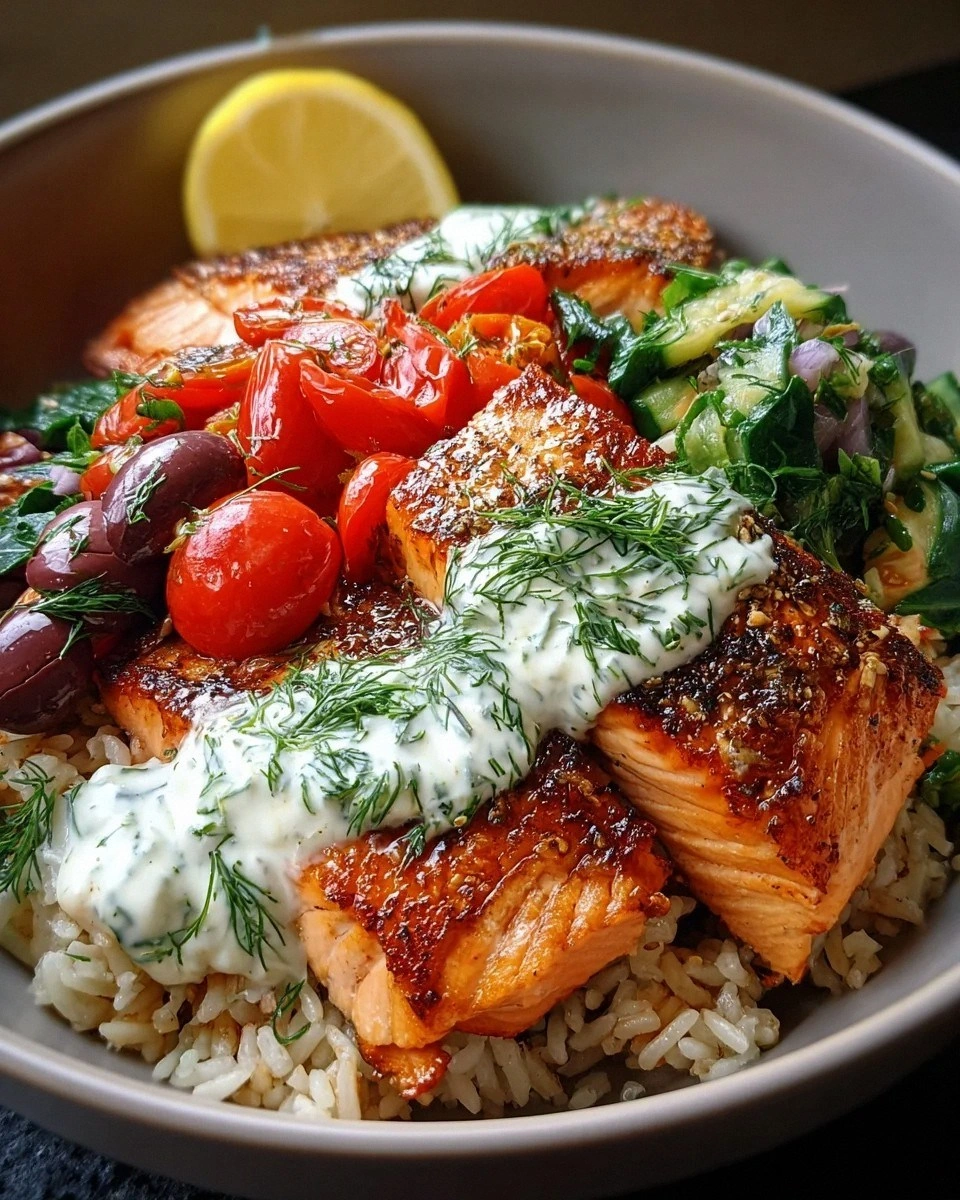
Picture this: the sizzle of olive oil hitting a hot pan, the gentle crackle of rice as it transforms into a golden, crispy crust, and the aroma of fresh lemon zest dancing with dried oregano like a Mediterranean breeze. The salmon, brushed with a whisper of salt and pepper, turns a buttery pink, its edges crisping just enough to give that satisfying snap when you bite into it. Meanwhile, the vegetables—crunchy red bell pepper, tender zucchini, sweet cherry tomatoes, and briny Kalamata olives—nestle around the base, each bite delivering a burst of color and flavor that makes your eyes widen before your tongue even gets a chance to react.
Most recipes get this completely wrong. They either drown the salmon in a sauce that masks its natural richness, or they serve the rice soggy, turning the whole bowl into a mushy disappointment. What I’ve discovered, after a few trial runs and a few kitchen mishaps (yes, there was a time the rice stuck to the pan like a stubborn post‑it note), is that the secret lies in a simple sequence of steps that respect each ingredient’s integrity. The rice gets a quick, high‑heat sear to form a crunchy crust, the salmon is pan‑seared to lock in juices, and the lemon‑yogurt drizzle ties everything together with a tangy brightness that cuts through the richness.
Okay, ready for the game‑changer? I’m about to walk you through every single step—by the end, you’ll wonder how you ever made this any other way. I dare you to taste this and not go back for seconds. Let’s dive in, because this next part? Pure magic.
What Makes This Version Stand Out
- Texture: The rice forms a golden, crackling crust that shatters like thin ice, while the salmon retains a buttery interior that melts in your mouth.
- Flavor Fusion: A Mediterranean‑inspired medley of olives, capers, and oregano meets the bright acidity of lemon, creating a balanced palate that feels both familiar and adventurous.
- Simplicity: All the ingredients are pantry‑friendly, and the technique relies on basic stovetop skills—no fancy equipment required.
- Visual Appeal: The bowl bursts with color—vivid reds, deep greens, and sunny yellows—making it Instagram‑ready without any extra garnish.
- Crowd Reaction: I’ve served this at dinner parties and the compliments start rolling in before the first spoonful hits the table; it’s a guaranteed crowd‑pleaser.
- Ingredient Quality: Fresh, firm salmon and high‑quality extra‑virgin olive oil elevate the dish from everyday to restaurant‑level.
- Cooking Method: The two‑stage sear—first the rice, then the salmon—creates layers of flavor that you simply can’t achieve with a single‑pan bake.
- Make‑Ahead Potential: The rice can be pre‑cooked and chilled, and the lemon‑yogurt drizzle stores beautifully for up to 24 hours, saving you precious prep time.
Inside the Ingredient List
The Flavor Base
The star of this bowl is undoubtedly the salmon fillets. Fresh, firm salmon provides a buttery richness that acts as the canvas for all the bright, briny notes that follow. If you can, choose wild‑caught salmon; its higher omega‑3 content not only makes it healthier but also gives it a firmer texture that holds up during the sear. Skipping the salmon? The whole bowl loses its anchor, and you’ll end up with a collection of vegetables and rice that lack that satisfying protein punch.
Olive oil is the silent hero. Its fruit‑forward flavor adds depth to both the rice crust and the salmon, while its high smoke point ensures a clean, crisp sear without bitter notes. If you’re in a pinch, a light‑taste grapeseed oil works, but you’ll miss out on that Mediterranean nuance that makes this dish sing.
Sea salt and freshly ground black pepper are the foundational seasonings. They enhance the natural flavors of the salmon and the vegetables, and they also help draw out moisture from the rice, encouraging that coveted crunch. Remember, seasoning is a layering process—lightly season the rice first, then the salmon, and finish with a pinch of salt on the finished bowl.
The Texture Crew
Cooked jasmine or basmati rice provides the perfect base because its long grains stay separate when cooled, preventing clumping. Leftover rice works best; it’s already dry enough to crisp up without turning gummy. If you’re starting from scratch, cook the rice a day ahead, spread it on a tray, and refrigerate uncovered to dry out the surface.
Red bell pepper, zucchini, red onion, cherry tomatoes, and Kalamata olives bring a medley of textures—from the crisp snap of the pepper to the juicy burst of the tomatoes. Each vegetable contributes its own flavor profile, creating a symphony of sweet, tangy, and salty notes. Feel free to swap in roasted eggplant or artichoke hearts for a different twist, but keep the color contrast for visual impact.
Capers, while optional, add a briny pop that cuts through the richness of the salmon and the creaminess of the yogurt drizzle. If you’re not a fan, simply omit them; the dish will still be delicious, but you’ll miss that subtle “sea‑kissed” nuance.
The Unexpected Star
Dried oregano is the aromatic glue that binds the Mediterranean vibe together. Its earthy, slightly bitter notes balance the bright lemon and the salty olives, preventing the bowl from becoming one‑dimensional. If you’re out of oregano, a pinch of thyme or a sprinkle of za’atar can provide a comparable herbal lift.
Plain Greek yogurt forms the base of the lemon‑yogurt drizzle, offering a creamy tang that brightens the entire bowl. The yogurt’s thickness helps it cling to the rice and salmon without sliding off, while its natural acidity mirrors the lemon’s zing. For a lighter version, use low‑fat Greek yogurt; the flavor remains robust, and the texture stays luscious.
The Final Flourish
Fresh lemon juice and zest are the finishing fireworks. The juice adds an immediate burst of acidity that lifts the heaviness of the salmon, while the zest introduces aromatic oils that perfume the dish from the first sniff. Don’t skimp on the zest—it’s the secret weapon that makes the flavor feel vibrant rather than merely sour.
Fresh dill or parsley (or a mix of both) brings a herbaceous freshness that rounds out the bowl. Dill pairs beautifully with fish, while parsley adds a grassy brightness. If you’re feeling adventurous, a handful of mint can add an unexpected cool note that pairs well with the lemon.
Finally, a squeeze of lemon wedges at the table lets each diner customize the brightness to their liking, ensuring every bite is as lively as the first. And yes, a final pinch of salt and a grind of black pepper right before serving is the last step that brings everything into harmonious balance.
Everything's prepped? Good. Let's get into the real action…
The Method — Step by Step
Start by heating a large non‑stick skillet over medium‑high heat. Add 1 tablespoon of olive oil and let it shimmer—this is the moment the pan tells you it’s ready. While the oil heats, pat the cooked rice dry with a paper towel; any excess moisture will sabotage the crunch. Spread the rice in an even, thin layer (about ¼‑inch thick) and press it gently with a spatula. Let it sit untouched for 4‑5 minutes; you’ll hear a faint sizzle and see the edges start to turn golden. Tip: Resist the urge to stir—patience is the secret to that perfect crust.
When the rice is a deep amber, flip it in sections using a wide spatula.
Continue cooking the second side for another 3‑4 minutes until both sides are uniformly crisp. Once done, transfer the rice crust to a plate, keeping it warm. This crunchy foundation will later act like a buttery, edible bowl for the salmon and veggies.Kitchen Hack: If the rice sticks, add a splash of water (just a teaspoon) and cover the pan for 30 seconds; the steam will loosen the crust without sogging it.Now, turn the heat down to medium and add the remaining 1 tablespoon of olive oil. Season the salmon fillets on both sides with sea salt and freshly ground black pepper. Place the fillets skin‑side down (or flesh‑side down if skin was removed) in the hot pan. You’ll hear an immediate sizzle that signals a seal is forming. Cook for about 3‑4 minutes without moving them; the edges will start to turn opaque and the bottom will develop a caramelized crust.
Flip the salmon gently using a fish spatula. Add the dried oregano to the pan, letting its aroma mingle with the buttered fish. Cook for another 2‑3 minutes, depending on thickness, until the interior reaches an internal temperature of 125°F for medium‑rare or 135°F for well‑done. Remove the salmon from the pan and let it rest on a cutting board for a minute; this rest allows the juices to redistribute, keeping the fish moist.
While the salmon rests, increase the heat to medium‑high and add the sliced red bell pepper, zucchini, and red onion to the same pan. Toss them quickly, letting them pick up the residual salmon bits—this is flavor layering at its finest. Cook for 2‑3 minutes, just until they start to soften but still retain a crisp bite. Add the cherry tomatoes, Kalamata olives, and capers, stirring for another minute. The tomatoes should soften slightly, releasing a sweet juice that coats the vegetables.
- Keep the heat steady and stir constantly to prevent any soggy spots. When the vegetables are glossy and fragrant, turn off the heat.Watch Out: If you let the vegetables sit too long, they’ll release too much water and the pan will steam rather than sear, ruining the crispness you’ve worked so hard to achieve.
In a small bowl, whisk together the plain Greek yogurt, fresh lemon juice, lemon zest, and chopped dill or parsley. This lemon‑yogurt drizzle should be smooth, with a bright, tangy scent that makes your mouth water before you even taste it. Season with a pinch of salt and a grind of black pepper, then set aside. The acidity will balance the richness of the salmon while adding a silky texture that clings to every bite.
Now it’s assembly time. Place the crispy rice crust in the center of each serving bowl, shaping it into a shallow well. Arrange the sautéed vegetables around the edges, allowing the colors to radiate like a painter’s palette. Slice the rested salmon into generous portions and lay them atop the rice, letting the buttery flesh peek out. Drizzle the lemon‑yogurt sauce generously over the salmon and rice, letting it cascade down the sides.
Finish with a final squeeze of fresh lemon wedges, a scatter of extra dill for garnish, and—if you’re feeling bold—a pinch of sea salt on top. Step back, admire the masterpiece, and inhale the mingling aromas of citrus, herbs, and toasted rice. That’s it — you did it. But hold on, I've got a few more tricks that'll take this to another level…
Insider Tricks for Flawless Results
The Temperature Rule Nobody Follows
Most home cooks crank the heat to “high” thinking it will speed up the sear, but that just scorches the outside and leaves the inside raw. The secret is to start at medium‑high for the rice crust, then drop to medium for the salmon, and finally finish the vegetables on medium‑high again. This staggered approach lets each component develop its own perfect texture without compromising the others. I once tried the “all‑high” method and ended up with a burnt rice base and soggy fish—lesson learned.
Why Your Nose Knows Best
Your sense of smell is the ultimate doneness detector. When the rice is ready, you’ll notice a nutty, toasted aroma that rises from the pan. Likewise, the salmon releases a sweet, caramelized scent as the proteins undergo the Maillard reaction. If you ever doubt whether something is done, trust the nose before the timer. A friend once over‑cooked the salmon because she relied solely on a clock; the result was dry, flavor‑less fish that could have been saved by a quick sniff.
The 5‑Minute Rest That Changes Everything
Resting the salmon for just five minutes after searing is a game‑changer. During this brief pause, the juices redistribute throughout the flesh, preventing them from spilling out onto the plate and leaving the fish dry. Think of it as a mini‑spa for the fish. If you’re in a rush, you can tent the salmon loosely with foil to keep it warm while you finish the vegetables.
The Yogurt Drizzle Balance Act
The lemon‑yogurt sauce should never be too thick or too runny. If it’s too thick, it will clump on the rice; if it’s too thin, it will slide off. To achieve the perfect consistency, start with Greek yogurt, add lemon juice a teaspoon at a time, and whisk until you reach a pourable but still creamy texture. A splash of the pan‑deglazed vegetable juices can add an extra layer of umami without diluting the tang.
The Crunch Preservation Trick
If you’re preparing the bowl ahead of time for a crowd, keep the rice crust separate from the sauce until the last minute. Store the crust in a single layer on a parchment‑lined tray, covered loosely with foil. When you’re ready to serve, re‑heat the crust quickly in a hot skillet for 30 seconds—this revives the crunch without overcooking the rest of the components.
Creative Twists and Variations
This recipe is a playground. Here are some of my favorite ways to switch things up:
Spicy Sriracha Kick
Add a tablespoon of Sriracha to the lemon‑yogurt drizzle and sprinkle crushed red pepper flakes over the finished bowl. The heat pairs beautifully with the cool yogurt and bright lemon, giving the dish a bold, Asian‑inspired twist that will wow spice lovers.
Tropical Coconut Curry
Swap the olive oil for coconut oil, and stir a teaspoon of red curry paste into the yogurt sauce along with a splash of coconut milk. Top with toasted coconut flakes and a few slices of mango for a sweet‑savory island vibe that transports you to a beachside café.
Herbaceous Green Goddess
Replace dill with fresh basil and parsley, and blend a handful of spinach into the yogurt drizzle. The resulting sauce is a vivid green, packed with extra nutrients, and it adds an earthy depth that complements the salmon’s richness.
Mediterranean Grain Swap
Instead of jasmine or basmati rice, use quinoa or farro for a nuttier texture and added protein. Cook the grain with a pinch of turmeric for a golden hue, then follow the same crisping technique for a wholesome, gluten‑free alternative.
Cheesy Parmesan Finish
Sprinkle a generous handful of grated Parmesan or Pecorino Romano over the vegetables just before serving. The cheese melts slightly, adding a salty umami layer that deepens the overall flavor profile—perfect for cheese aficionados.
Storing and Bringing It Back to Life
Fridge Storage
Place the cooked rice crust in an airtight container, the sautéed vegetables in a separate one, and the salmon fillets wrapped in parchment paper. The lemon‑yogurt drizzle can be stored in a small jar. All components keep well for up to 3 days. When ready to eat, reheat the rice crust in a hot skillet for 1‑2 minutes to revive its crunch.
Freezer Friendly
The rice crust freezes beautifully—spread it on a parchment sheet, flash freeze for 30 minutes, then transfer to a zip‑top bag. Salmon fillets can be frozen individually wrapped in foil. Vegetables retain their flavor when frozen but may lose some crispness; a quick sauté after thawing restores texture. The yogurt sauce should be kept in the fridge, not frozen, to prevent separation.
Best Reheating Method
To bring the bowl back to life, heat a non‑stick skillet over medium heat, add a teaspoon of olive oil, and place the rice crust in the pan. Add a splash of water (about a tablespoon) and cover for 30 seconds; the steam will soften any hardened edges while preserving the outer crunch. Meanwhile, gently warm the salmon and vegetables in the microwave or a second skillet. Finish with a fresh drizzle of the lemon‑yogurt sauce and a quick squeeze of lemon for that just‑made feel.