It all began on a rainy Tuesday when I tried to impress my sister with a fancy dinner that would outshine the last week’s burnt lasagna disaster. I was juggling a skillet, a blender, and a stack of recipe books, and the kitchen was a chaotic symphony of sizzling oil and the clatter of pans. The moment the salmon hit the pan and released a fragrant steam that smelled like the Mediterranean, I knew I had stumbled upon a culinary revelation. I dared myself to taste the first bite and, honestly, I almost turned away because the flavors were too good to be true.
Imagine a golden crust that crackles like crisp autumn leaves, a tender interior that melts in your mouth, and a burst of citrusy brightness that dances on your tongue. The aroma of oregano and garlic lingers in the air, mingling with the sharp tang of lemon and the briny kiss of olives. The sound of the skillet is a satisfying hiss, a cue that the magic is happening. When you take that first bite, the textures mingle—crisp edges, silky flesh, and the gentle crunch of kale—creating a symphony of sensations that feel like a summer breeze on a quiet evening. I swear, that sizzle when it hits the pan? Absolute perfection.
What makes this version a game‑changer is not just the combination of flavors, but the way it brings them together in a single pan without compromising on texture or nutrition. I’ve stripped away the clutter of multiple pots and pans, yet every element shines with its own personality. The dish feels light, yet it packs protein, healthy fats, and a generous dose of vegetables that keep you full and energized. And the best part? It’s so easy that even a novice can pull it off, while seasoned chefs will find it a delightful shortcut to impress.
Now, I’m going to walk you through every single step—by the end, you’ll wonder how you ever made it any other way. I dare you to taste this and not go back for seconds, because once you experience this, you’ll never settle for anything else. Let’s dive into the details that make this skillet Greek salmon the best you’ll ever make at home.
What Makes This Version Stand Out
- Flavor Depth: The combination of oregano, garlic, lemon, olives, and sun‑dried tomatoes creates a layered taste that feels both Mediterranean and comforting. Each bite reveals a new note, keeping the palate engaged.
- Texture Contrast: The salmon’s crisp edges give way to a buttery interior, while the kale and cauliflower rice add a satisfying bite that balances the dish.
- One‑Pan Simplicity: You cook everything in a single skillet, eliminating the need for multiple pots and reducing cleanup to a fraction of the usual effort.
- Healthy Profile: Avocado oil, dairy‑free feta, and a generous amount of greens keep the meal low in processed ingredients and high in heart‑healthy fats.
- Time Efficiency: Prep in 15 minutes, cook in 30 minutes—total time of 45 minutes means you can have dinner on the table while the kids finish homework.
- Crowd‑Pleaser: The bright colors and vibrant flavors make it an instant hit at dinner parties or family gatherings, even for those who usually shy away from fish.
- Make‑Ahead Friendly: The dish holds up well in the fridge and can be reheated without losing its flavor or texture, making it ideal for meal prep.
- Ingredient Quality: Using fresh, high‑quality ingredients like wild‑caught salmon and hand‑picked olives elevates the dish beyond ordinary skillet meals.
Alright, let’s break down exactly what goes into this masterpiece. And trust me, each component plays a crucial role in delivering that wow factor.
Inside the Ingredient List
The Flavor Base
Dried oregano and garlic powder form the aromatic foundation of this dish. Oregano brings a warm, slightly peppery note that pairs beautifully with the citrusy brightness of lemon. Garlic powder offers a subtle, round undertone that lingers after the initial bite. If you skip these, the dish will feel flat and lack that unmistakable Greek character. A quick swap for fresh oregano can intensify the flavor, but be aware that it releases more moisture, which could alter the skillet’s crispness.
The Texture Crew
Cauliflower rice and chopped kale are the unsung heroes that add body and crunch. Cauliflower rice keeps the meal low on carbohydrates while providing a fluffy base that absorbs the sauce. Kale contributes a satisfying chew and a dose of iron and vitamins. Together, they create a textural contrast that complements the tender salmon. If you’re a fan of a more robust bite, consider adding diced bell pepper or sliced zucchini; the extra vegetables will bring both color and crunch.
The Unexpected Star
Kalamata olives and sun‑dried tomatoes add a briny, umami punch that elevates the dish beyond ordinary. The olives’ saltiness balances the lemon’s acidity, while the sun‑dried tomatoes introduce a chewy, slightly sweet component that echoes Mediterranean staples. If olives are out of season, a small amount of capers can replicate the brine effect, but be cautious with quantity to avoid overpowering the dish.
The Final Flourish
Fresh parsley, a splash of broth, and dairy‑free feta cheese tie everything together. Parsley adds a fresh, herbaceous finish that brightens the plate, while a small splash of broth keeps the skillet moist, preventing the ingredients from drying out. The feta cheese, though dairy‑free, offers a creamy texture that melts slightly into the sauce, creating a velvety coating over the salmon. If you prefer a vegan version, substitute the feta with crumbled tofu seasoned with nutritional yeast.
Everything's prepped? Good. Let's get into the real action.
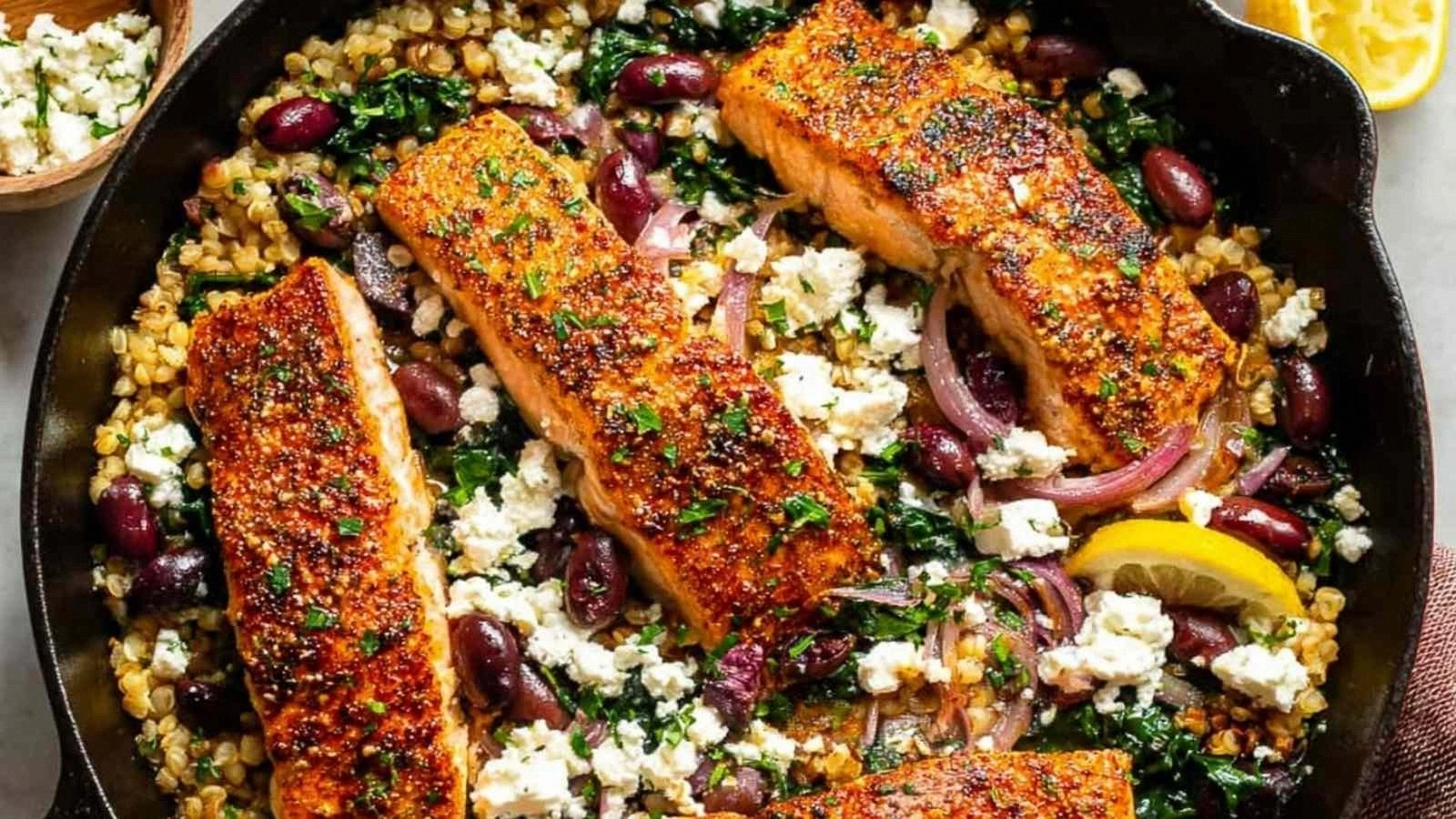
The Method — Step by Step
- Start by patting the salmon fillets dry with paper towels. A dry surface ensures a golden sear, preventing the fish from steaming. Season each fillet with sea salt, black pepper, oregano, and garlic powder, pressing the spices into the flesh for maximum flavor.
- Heat the avocado oil in a large non‑stick skillet over medium‑high heat until shimmering. The oil should be hot enough that a drop of water dances across the surface. This temperature is key to achieving the crisp edges that many recipes fail to produce.
- Place the salmon fillets skin‑side down in the skillet. Let them cook undisturbed for 4–5 minutes; the skin will become crisp and release from the pan when ready. This is the moment of truth—watch the color change to a beautiful golden brown.
- Flip the fillets gently and add the minced garlic, diced red onion, and kale. Stir-fry for 2 minutes until the onion softens and the kale wilts slightly. The aromatics will infuse the oil, creating a fragrant base for the sauce.
- Pour in the broth and squeeze the juice of the whole lemon into the pan. The acidity cuts through the richness of the salmon and brightens the entire dish. Let the mixture simmer for 3 minutes, allowing the flavors to meld.
- Add the cauliflower rice, olives, and sun‑dried tomatoes to the skillet. Stir gently to combine, ensuring the rice is evenly coated with the lemon‑garlic broth. This step transforms the skillet into a one‑pot wonder.
- Reduce the heat to medium, cover the skillet, and let everything cook for 8–10 minutes. The cauliflower should be tender but not mushy, and the salmon will finish cooking through. The lid traps steam, keeping the veggies moist.
- Uncover the skillet and sprinkle the dairy‑free feta cheese over the top. Allow the cheese to melt slightly, creating a creamy, tangy layer that coats the salmon and veggies. The heat from the pan will gently melt the cheese without making it rubbery.
- Finish the dish with a handful of fresh parsley, a final squeeze of lemon juice, and a pinch of sea salt if needed. Toss everything together for a quick final stir, ensuring the parsley is evenly distributed for that fresh finish.
- Serve immediately, either on a large platter or individual plates. The dish pairs wonderfully with crusty bread or a side of Greek salad. If you’re craving leftovers, store them in the fridge and reheat gently with a splash of water to restore moisture.
That’s it—you did it. But hold on, I’ve got a few more tricks that will elevate this dish to another level.
Insider Tricks for Flawless Results
The Temperature Rule Nobody Follows
Many cooks start with high heat and then lower it, which can cause the salmon to lose its crispness. Instead, heat the skillet to medium‑high, then reduce to medium after placing the fillets. This steady temperature keeps the exterior crisp while allowing the interior to finish gently. I once tried the opposite—starting low—and the salmon came out soggy and lost its golden edges.
Why Your Nose Knows Best
Before you add the broth, take a quick sniff of the sizzling oil. A pleasant, nutty aroma indicates the oil has reached the right temperature. If the smell is flat or metallic, let the oil heat longer. Your nose is a reliable indicator of pan readiness, saving you from under‑cooked or over‑fried results.
The 5‑Minute Rest That Changes Everything
After cooking, let the skillet rest for five minutes before serving. This pause allows the flavors to redistribute and the juices to settle, giving the dish a more cohesive taste. Skipping this step can leave the salmon slightly uneven in flavor and the sauce a bit watery.
The Secret to Crispy Kale
When adding kale, sauté it in a dry pan for a minute before tossing it with the other ingredients. This pre‑sauté step removes excess moisture, preventing the kale from steaming and turning mushy. The result is a crisp, slightly charred kale that holds its texture throughout the dish.
The Olive Oil Swap
If you prefer a richer flavor, substitute avocado oil with extra virgin olive oil. The olive oil’s fruity undertones enhance the Mediterranean profile, but be sure to keep the heat moderate to avoid burning. The difference in smoke points can be subtle, but the flavor impact is significant.
The Feta Finish
Dairy‑free feta should be added at the very end, just before serving. This timing allows the cheese to melt slightly without turning into a gooey mess. If you like a stronger cheese flavor, sprinkle a bit more on top—just remember that the feta will continue to soften as it sits.
Creative Twists and Variations
Mediterranean Quinoa Bowl
Swap cauliflower rice for cooked quinoa to add a nutty flavor and extra protein. The quinoa’s chewy texture complements the salmon, and the dish becomes a hearty bowl perfect for lunch. Pair it with a drizzle of tahini sauce for a Middle Eastern twist.
Spicy Mediterranean Kick
Add a pinch of crushed red pepper flakes when sautéing the garlic and onions. The heat will contrast nicely with the sweet olives and tart lemon, giving the dish a fiery edge. This variation is ideal for those who love a bit of spice in their Mediterranean meals.
Pesto‑Infused Salmon
Stir in a tablespoon of basil pesto just before adding the broth. The pesto’s herbal brightness enhances the Greek theme while adding a new layer of flavor. It also creates a vibrant green hue that’s Instagram‑ready.
Gluten‑Free Greek Pasta
Replace the cauliflower rice with gluten‑free pasta or spiralized zucchini noodles. The pasta’s al dente bite pairs wonderfully with the flaky salmon. This version is a great way to incorporate a carb source while keeping the dish Mediterranean.
Herb‑Roasted Salmon
After cooking, top the salmon with fresh rosemary and thyme before serving. The herbs will release their oils, adding a fragrant layer that complements the citrusy sauce. This tweak is perfect for a more aromatic dinner.
Vegan Greek Delight
Replace the salmon with marinated tofu or tempeh, and use a vegan feta alternative. The tofu absorbs the lemon‑garlic sauce, while the vegan feta provides a creamy texture. This version keeps all the flavors while staying plant‑based.
Storing and Bringing It Back to Life
Fridge Storage
Store the finished dish in an airtight container in the refrigerator for up to 3 days. The salmon remains moist, and the flavors deepen over time. When reheating, add a splash of water to the skillet to re‑hydrate the cauliflower rice and prevent it from drying out.
Freezer Friendly
For longer storage, freeze the dish in portioned containers for up to 2 months. Thaw overnight in the fridge before reheating. A quick stir in a low‑heat skillet with a tablespoon of water will revive the sauce and keep the salmon tender.
Best Reheating Method
Reheat in a skillet over medium heat, adding a small amount of broth or water to maintain moisture. Stir gently until the dish is heated through. Avoid microwaving, as it can make the salmon rubbery and the vegetables soggy.