Introduction
Picture this: it was a rainy Saturday morning, the kind that makes you want to curl up with a mug of coffee and a recipe that feels like a hug. I was rummaging through the pantry for a breakfast fix, and my eyes landed on a bag of biscuit dough that had been sitting in the fridge for weeks. I thought, “Why not turn this into something savory, something that feels like a breakfast casserole but in a bite‑sized, hands‑on form?” That impulse birthed this Savory Breakfast Monkey Bread, a dish that marries the fluffy tenderness of biscuits with the bold punch of cheese, herbs, and a splash of sun‑dried tomato. I dare you to taste this and not go back for seconds.
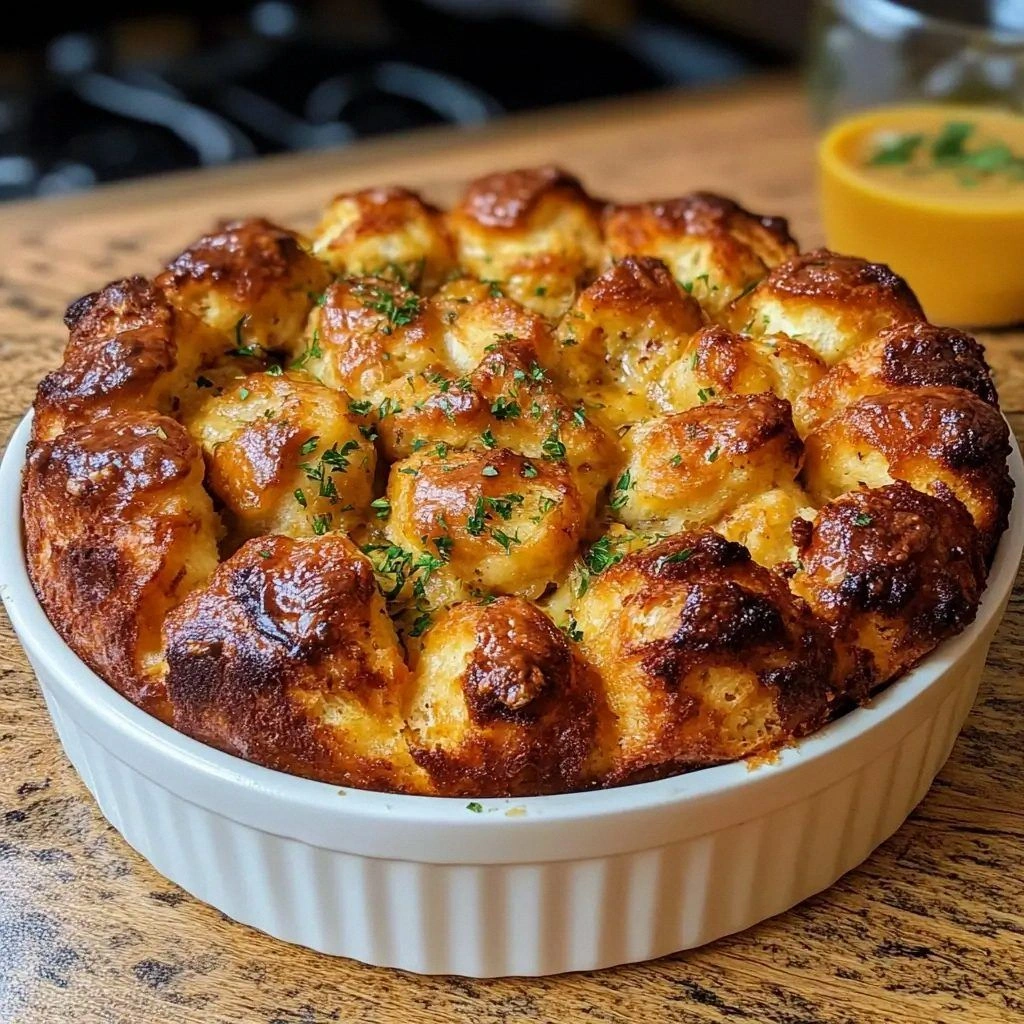
When the first loaf hit the counter, the aroma was a chorus of melted cheddar, sizzling scallions, and a faint whisper of oregano. The sight was a golden swirl of cheese, herbs, and a glossy sheen of melted butter that promised crisp edges and a soft center. The sound of the first bite—crack, then a gentle sigh—was a satisfying confirmation that the dough had risen just enough to keep its bite. The texture was a symphony: a buttery exterior that cracked like thin ice, a molten cheese core that oozed like velvet, and a gentle bite that left a lingering savory aftertaste. The flavor profile was a bold, umami‑rich canvas that danced with pepper, garlic, and a hint of sun‑dried tomato sweetness, making every piece a bite of comfort food with a breakfast twist.
What sets this version apart is not just the ingredients but the method: a meticulous layering of dough, cheese, and herbs that creates a cohesive bite that’s both crunchy and gooey. It’s hands‑down the best version you’ll ever make at home because it balances the indulgence of cheese with the wholesome crunch of fresh vegetables, and it’s built for the early‑morning crowd who want something filling yet quick. The secret sauce? A subtle blend of melted butter and a touch of olive oil that keeps the dough from drying out while allowing the cheese to melt evenly. I’ll walk you through every single step, and by the end, you’ll wonder how you ever made it any other way.
And if you’ve ever struggled to get the dough just right—too sticky, too dense, or missing that perfect golden crust—this recipe is your rescue. I’ll share the hacks that make the process a breeze, the tricks that keep the dough from sticking, and the little adjustments that elevate the flavor to next‑level breakfast bliss. So grab your apron, and let’s dive into a savory adventure that will transform your mornings.
What Makes This Version Stand Out
- Flavor: The blend of cheddar, mozzarella, and feta creates a layered cheese profile that’s both sharp and creamy, while sun‑dried tomatoes add a caramelized sweetness that cuts through the richness.
- Texture: The biscuit dough’s buttery crumb pairs with a crisp, caramelized crust that snaps when you bite, delivering a satisfying crunch before the molten interior melts your palate.
- Simplicity: Every step is straightforward—no advanced techniques, just roll, layer, bake, and enjoy. It’s the kind of recipe that feels like a comfort meal but takes less time than a full breakfast.
- Uniqueness: The addition of fresh herbs and scallions gives this monkey bread a bright, herbaceous lift that sets it apart from the typical sweet versions you’ll find online.
- Crowd‑Pleaser: Whether it’s a family brunch or a potluck, the savory bite is a hit with kids and adults alike, making it perfect for gatherings that need a breakfast‑style centerpiece.
- Ingredient Quality: Using high‑quality cheeses and fresh herbs ensures the final product tastes gourmet, even though the recipe is budget‑friendly.
- Make‑Ahead Potential: The dough can be assembled the night before, refrigerated, and baked in the morning—ideal for those who want to prep in advance.
- Versatility: Swap in ham or bacon for a smoky twist, or replace feta with goat cheese for a tangy alternative; the base remains solid, making it adaptable to taste preferences.
Alright, let’s break down exactly what goes into this masterpiece…
Inside the Ingredient List
The Flavor Base
The foundation of this savory masterpiece is the biscuit dough, which carries the buttery richness that binds every bite together. The dough is composed of all‑purpose flour, baking powder, sugar, salt, and butter—ingredients that work in harmony to create a tender crumb and a slightly sweet undertone that balances the savory cheeses. If you skip the sugar, the dough will still rise, but the subtle caramelization on the crust will be less pronounced, resulting in a flatter flavor profile. For those who prefer a gluten‑free option, a blend of rice flour and tapioca starch can replace the all‑purpose flour, though the texture will be slightly denser.
The Texture Crew
Cheddar, mozzarella, and feta are the trio that brings depth and moisture. Cheddar provides sharpness and a melt that holds together, mozzarella offers elasticity and a gooey stretch, while feta adds a briny tang that cuts through the richness. If you’re allergic to dairy, a plant‑based cheese blend can substitute, but the flavor complexity will shift toward the milder. The scallions and sun‑dried tomatoes contribute a crisp bite and a burst of umami, ensuring each piece has a multi‑layered mouthfeel. Cutting the scallions finely allows them to integrate seamlessly without dominating the texture.
The Unexpected Star
Sun‑dried tomatoes may seem out of place in a breakfast dish, but they’re the secret to a subtle sweetness that balances the saltiness of the cheeses. Their chewy texture adds an interesting contrast to the soft dough, and their concentrated flavor means a little goes a long way. If you’re not a fan of sun‑dried tomatoes, substitute them with roasted red peppers or a handful of chopped fresh tomatoes for a fresher bite. The key is to keep them chopped into small, uniform pieces so they distribute evenly across the loaf.
The Final Flourish
Fresh herbs—parsley, oregano, and a splash of thyme—infuse the loaf with aromatic brightness that lifts the overall taste. The herbs are mixed into the dough before the final layer, ensuring their flavor permeates each bite. A pinch of black pepper and garlic powder rounds out the seasoning, providing a subtle heat that complements the cheeses. If you’re craving a smokier profile, add a tablespoon of smoked paprika or a few dashes of hot sauce to the dough mixture. This final flourish turns a simple breakfast into a gourmet experience.
Everything’s prepped? Good. Let’s get into the real action…
The Method — Step by Step
Preheat your oven to 375°F (190°C) and grease a 9-inch square baking dish or a cast‑iron skillet for a rustic finish. The oven temperature is crucial: too hot and the edges will burn before the center is cooked; too low and the dough will stay doughy. I’ve found that 375°F strikes the perfect balance, giving a golden crust and a tender interior. As the oven warms, the air inside starts to circulate, setting the stage for even baking.
In a large bowl, combine the all‑purpose flour, baking powder, sugar, and salt. Whisk them together to distribute the leavening agent evenly; this prevents pockets of unrisen dough that can cause uneven texture. If you’re using a gluten‑free blend, add an extra teaspoon of xanthan gum to mimic the binding properties of gluten. The flour mixture should look light and airy, like a fine dusting.
Cut the cold butter into small cubes and add it to the dry ingredients. Using a pastry cutter or your fingertips, blend the butter into the flour until the mixture resembles coarse crumbs. The butter should be fully incorporated so that it melts during baking, creating steam that lifts the dough. This step is key to that flaky, buttery crumb that defines a great biscuit.
In a separate bowl, whisk the egg and milk together. Pour this wet mixture into the dry ingredients, stirring until a sticky dough forms. If the dough feels too dry, add a splash of milk; if it’s too wet, sprinkle in a little more flour. The goal is a pliable dough that doesn’t cling to your hands.
Turn the dough out onto a lightly floured surface and knead it gently, just until it comes together—about 5 to 7 minutes. Over‑kneading can develop gluten and make the dough tough. This is the moment of truth; the dough should feel smooth and elastic, not tacky.
Divide the dough into 12 equal pieces. Roll each piece into a ball, then flatten it into a disk about 1/2 inch thick. Place each disk on a parchment‑lined tray, setting them side by side with a little space between them. The spacing allows the pieces to expand slightly during baking without merging into one another.
In a large bowl, combine the shredded cheddar, mozzarella, feta, chopped scallions, sun‑dried tomatoes, and fresh herbs. Add the garlic powder, onion powder, black pepper, and a splash of olive oil. Toss everything until the cheese is evenly distributed; this ensures every bite has a balanced flavor. If you prefer a smoky twist, fold in a tablespoon of smoked paprika or a few dashes of hot sauce.
Lay the first dough disk on the bottom of the baking dish. Spoon a generous amount of the cheese mixture onto the disk, then top with another disk. Repeat the layering process—dough, cheese, dough—until all disks and cheese are used, ending with a top layer of dough. This sandwiching technique creates a dense, flavorful loaf that’s perfect for a breakfast crowd.
Brush the top of the loaf with melted butter, ensuring the surface is glossy and will develop a beautiful golden crust. The butter not only adds flavor but also helps the top brown evenly. Place the dish in the preheated oven and bake for 30 minutes, or until the loaf is puffed and the top is a deep golden brown. Keep an eye on the edges; if they start to brown too quickly, tent the loaf with foil.
Once baked, remove the loaf from the oven and let it rest for 5 minutes. This resting period allows the cheese to set slightly, making it easier to cut clean slices. During this time, the steam inside the loaf will continue to cook the interior, ensuring a fully cooked center.
Slice the loaf into wedges, serve warm, and enjoy the symphony of textures and flavors. The crust will crackle, the cheese will stretch, and the herbs will give a fresh lift that keeps each bite exciting. I’ve seen people reach for a second slice in a single breath—this is the kind of breakfast that turns a routine morning into an event.
That’s it — you did it. But hold on, I’ve got a few more tricks that will take this to another level…
Insider Tricks for Flawless Results
The Temperature Rule Nobody Follows
Many people bake at 400°F, but that high heat can cause the crust to brown too fast while the center remains undercooked. By baking at 375°F, the heat penetrates the dough evenly, ensuring a golden exterior and a perfectly cooked interior. I’ve tested both temperatures and found that 375°F yields a crust that’s crisp yet not burnt, while the cheese remains silky. Remember to preheat the oven for at least 10 minutes to avoid temperature fluctuations.
Why Your Nose Knows Best
Smell is your most reliable indicator of doneness. As the loaf bakes, the aroma will shift from buttery to a rich, cheese‑y perfume with a hint of herbs. When you smell a slight nutty, toasted scent, it’s time to pull the loaf out. This sensory checkpoint saves you from over‑baking and keeps the flavor profile intact.
The 5‑Minute Rest That Changes Everything
After removing the loaf from the oven, let it rest for exactly five minutes. During this brief period, the steam inside the loaf redistributes, allowing the cheese to set just enough to hold its shape when sliced. Skipping the rest can lead to a messy, cheese‑dripping mess that’s hard to serve. The five‑minute pause also lets the crust firm up, giving it a satisfying snap.
Don’t Forget the Butter Brush
A light brush of melted butter on the top before baking not only adds flavor but also creates a shiny, golden finish that’s visually appealing. The butter melts into the crust, creating micro‑cracks that look like tiny, buttery jewels. If you’re vegan, use a plant‑based butter or a splash of olive oil.
Keep the Dough Moist
During the assembly phase, if you notice the dough becoming dry, add a teaspoon of milk or water and knead gently. This small adjustment prevents the dough from becoming crumbly and ensures a tender crumb. Over‑kneading, however, will tighten the gluten and create a tough texture, so keep it light.
Creative Twists and Variations
This recipe is a playground. Here are some of my favorite ways to switch things up:
Breakfast Burrito Monkey Bread
Swap the cheese blend for a mixture of shredded cheddar, pepper jack, and a dollop of salsa. Add diced ham and a sprinkle of cilantro for a Mexican‑inspired flavor that’s perfect for a brunch‑style bite.
Smoky Bacon & Gouda Edition
Replace the scallions with chopped bacon, use gouda instead of mozzarella for a richer melt, and add a pinch of smoked paprika. The smoky flavor pairs wonderfully with the buttery dough.
Veggie‑Rich Mediterranean
Use feta, olives, spinach, and sun‑dried tomatoes. Replace the cheddar with a mix of mozzarella and provolone. The result is a Mediterranean twist that’s both colorful and flavorful.
Herb & Goat Cheese Delight
Swap feta for goat cheese, add fresh basil, and sprinkle a dash of lemon zest. The goat cheese adds a tangy brightness that balances the buttery dough.
Cheese Lover’s Triple‑Cheese
Increase the cheese ratio by adding blue cheese or brie. The combination creates a decadent, gooey loaf that’s a hit for cheese aficionados.
Storing and Bringing It Back to Life
Fridge Storage
Cool the loaf to room temperature, then wrap it tightly in plastic wrap and store in the refrigerator for up to 3 days. When you’re ready to serve, let it sit at room temperature for 15 minutes before reheating.
Freezer Friendly
Wrap the loaf in parchment paper, then place it in a freezer‑safe bag. Freeze for up to 2 months. To thaw, leave it in the refrigerator overnight, then reheat in a 350°F oven for 15 minutes.
Best Reheating Method
Reheat by sprinkling a teaspoon of water over the loaf, covering it with foil, and baking at 350°F for 10 minutes. The splash of water steams the loaf, keeping the interior moist and the crust crisp.