Introduction
Picture this: a frantic Saturday night, the fridge a barren wasteland, a craving that feels like a siren call, and an accidental discovery that turned a culinary disaster into a triumph. I was juggling a half‑baked pizza crust that had turned into a rubbery slab, a bag of spicy Italian sausage that smelled like a fire‑pit, and a handful of bell peppers that had gone from bright to wilted. The kitchen was a battlefield of sizzling pans and steam, and the clock was ticking like a metronome. That moment, that chaotic symphony of flavors, was the spark that ignited this recipe. I dared myself to turn that mess into something extraordinary.
When the first bite hit, the heat from the sausage danced across my tongue like a playful spark, while the peppers added a sweet, smoky undertone that cut through the richness of the cheese. The crust, once a disappointment, now had a crisp edge that cracked like thin ice, and the sauce clung to the dough like velvet, creating a glossy sheen that was almost too pretty to eat. The aroma was intoxicating, a blend of garlic, oregano, and the subtle char from the peppers that made my nose do a happy dance. I felt like a chef who had stumbled upon a hidden treasure, a secret that only the brave would dare to share.
This isn’t just another pizza recipe. It’s a culinary manifesto that says: forget the bland, embrace the bold. The combination of spicy sausage, roasted peppers, and a touch of crushed red pepper creates a flavor profile that is both familiar and wildly adventurous. The sauce is thick and tangy, the cheese melts into a gooey blanket, and the crust delivers a satisfying crunch that keeps you coming back for more. It’s a pizza that speaks to the soul, a pizza that makes you want to shout, “This is hands down the best version you’ll ever make at home.”
What sets this version apart is a secret technique that most pizza lovers overlook: the pre‑roasting of peppers and onions, a small drizzle of olive oil before baking, and a sprinkle of fresh basil right at the end. These seemingly simple steps elevate the dish from ordinary to unforgettable. The result? A pizza that not only satisfies your hunger but also delivers a sensory experience that will linger in your memory. I’m about to walk you through every single step, so by the end, you’ll wonder how you ever made it any other way.
Let me walk you through every single step — by the end, you’ll wonder how you ever made it any other way.
What Makes This Version Stand Out
- Flavor Depth: The marriage of spicy sausage, roasted peppers, and a tangy tomato sauce creates layers of taste that unfold with each bite. The heat is tempered by the sweet caramelized peppers, leaving a balanced profile that satisfies both heat lovers and those who prefer a milder kick.
- Texture Contrast: The dough’s chewy center meets a crisp, slightly blistered exterior, while the cheese forms a molten blanket that melts into the sauce. The peppers add a satisfying snap that breaks the monotony of gooey cheese.
- Visual Appeal: The vibrant reds, greens, and golden cheese create a feast for the eyes. The specks of crushed red pepper add a dash of drama, making the pizza look as good as it tastes.
- Ease of Preparation: With a straightforward dough recipe and a quick pre‑roast technique, even novice cooks can master this dish. The steps are clear, the timing is forgiving, and the result is consistently excellent.
- Crowd‑Pleaser: Whether it’s a family dinner or a gathering of friends, this pizza brings people together. The bold flavors spark conversation, and the shared experience of biting into that first slice is pure joy.
- Ingredient Quality: Using fresh, high‑quality sausage and seasonal peppers makes a noticeable difference. The difference is not just in taste but also in the overall aroma that fills the kitchen.
- Make‑Ahead Friendly: The dough can be prepared a day ahead and chilled, while the toppings can be pre‑sliced and stored. This makes it ideal for last‑minute dinner parties.
- Versatility: The base can be adapted to different dietary preferences—gluten‑free crust, vegan cheese, or even a cauliflower base—without compromising the core experience.
Alright, let’s break down exactly what goes into this masterpiece…
Inside the Ingredient List
The Flavor Base
At the heart of this pizza is the sauce, a robust tomato blend that serves as the canvas for all the other flavors. The sauce is thick enough to cling to the dough without making it soggy, yet it’s not so thick that it feels heavy. The key to a great sauce is using San Marzano tomatoes, which have a natural sweetness that balances the acidity. If you can’t find them, canned crushed tomatoes in tomato puree are a suitable alternative. Adding a splash of red wine during the simmer gives depth and a subtle complexity that elevates the overall taste. Don’t forget the pinch of sugar; it tames the acidity and brings the sauce to life.
Another essential element is the olive oil, which adds a silky richness to the sauce and helps the cheese melt beautifully. A high‑quality extra‑virgin olive oil with a peppery finish works wonders. If you’re looking for a low‑fat version, a light olive oil will still provide the necessary moisture without the extra calories. The olive oil also helps the crust develop a golden, slightly caramelized edge when baked.
When you’re preparing the sauce, remember that it should thicken as it simmers. If it’s too thin, let it reduce on low heat for a few more minutes. Conversely, if it’s too thick, add a splash of water or broth. The goal is a sauce that coats the dough like velvet but still lets you see the toppings through.
Finally, the sauce is seasoned with dried oregano, crushed red pepper flakes, and a touch of salt. The oregano provides an earthy, herbal note, while the red pepper flakes add a subtle heat that complements the sausage. The salt is the final touch that brings everything together.
The Texture Crew
The dough is the backbone of this pizza, and its preparation is crucial for achieving the perfect chew and crunch. Use all‑purpose flour for a balance between elasticity and tenderness. The yeast is the leavening agent that gives the dough its airy structure; fresh active dry yeast works best, but instant yeast is a fine substitute if you’re short on time. Warm water at about 110°F activates the yeast without killing it, ensuring a smooth rise.
Once the dough has risen, roll it out to a thickness that allows the toppings to be evenly distributed without overpowering the crust. A thickness of 1/4 inch is ideal for a crispy yet chewy base. After rolling, let the dough rest for 10 minutes before adding the toppings; this relaxes the gluten and makes the dough easier to stretch.
The cheese is a critical component that provides creaminess and flavor. Fresh mozzarella has a high moisture content, which creates that signature gooey texture. Grated Parmesan adds a nutty, salty bite that balances the richness of the mozzarella. For an extra layer of flavor, sprinkle a small amount of Pecorino Romano on top; its sharpness cuts through the heat of the sausage.
When you add the cheese, spread it evenly to cover the dough. This ensures that every bite has that molten cheese experience. The cheese also helps the sauce adhere to the dough, creating a unified flavor profile.
The Unexpected Star
Spicy Italian sausage is the star that turns this pizza from ordinary to extraordinary. The sausage should be ground or sliced into bite‑size pieces, and it’s best if it’s freshly made with a blend of fennel, paprika, and red pepper flakes. The sausage’s natural oils coat the toppings, adding a savory depth that’s hard to replicate with pre‑made sausages. If you’re vegan, substitute with a plant‑based sausage that’s seasoned similarly.
When cooking the sausage, let it brown fully to develop a caramelized exterior. This process releases the flavors locked inside the meat, creating a savory base that complements the sweet peppers. If you prefer a milder version, reduce the amount of crushed red pepper flakes in the sausage mixture. However, for the full experience, keep the heat level high; this is what sets the dish apart.
Another ingredient that often gets overlooked but can elevate the dish is fresh basil. Adding a handful of basil leaves at the very end of baking or right after removing the pizza from the oven introduces a bright, aromatic note that balances the richness of the cheese and the heat of the sausage. Basil’s natural oils also add a subtle sweetness that ties everything together.
When you’re sourcing your sausage, look for brands that list minimal additives. The cleaner the ingredient list, the purer the flavor. If you’re making your own, you can adjust the spice levels to suit your taste, making this pizza truly customizable.
The Final Flourish
After the pizza comes out of the oven, a quick drizzle of high‑quality olive oil adds a glossy finish and a hint of peppery flavor. The oil also helps the cheese stay moist, preventing it from drying out as it cools. A sprinkle of crushed red pepper flakes before serving adds a final burst of heat, allowing diners to control their spice level.
For those who love a bit of crunch, a scattering of roasted pepper flakes or a sprinkle of toasted pine nuts can add texture. Pine nuts, when toasted, develop a buttery flavor that pairs beautifully with the sausage. If you’re looking to add a touch of color, a few fresh tomato slices or a squeeze of lemon juice can brighten the dish.
The final touch is a handful of fresh parsley or cilantro, which adds a fresh, herbal note that cuts through the richness. These herbs also add a pop of color that makes the pizza visually appealing. The combination of fresh herbs, a drizzle of olive oil, and the final sprinkle of spices creates a pizza that feels complete and ready to devour.
Everything's prepped? Good. Let's get into the real action…
The Method — Step by Step
- First, preheat your oven to 475°F (245°C) and place a pizza stone or an inverted baking sheet on the middle rack. A hot surface is essential for a crisp crust. While the oven warms, prepare your dough by mixing flour, yeast, sugar, and salt in a large bowl. Add warm water and olive oil, then knead until the dough is smooth and elastic. Let it rest for 30 minutes; this rest period allows the gluten to relax, making the dough easier to roll out.
- Next, while the dough is resting, start on the sauce. In a saucepan, heat a tablespoon of olive oil over medium heat. Add minced garlic and sauté until fragrant, about 30 seconds. Pour in the crushed tomatoes, a splash of red wine, and a pinch of sugar. Simmer for 15 minutes, stirring occasionally. The sauce should thicken slightly and develop a deep red color. Season with oregano, crushed red pepper flakes, and salt to taste. Set aside to cool.
- Now, roast the peppers and onions. Slice one red bell pepper, one green bell pepper, and half a red onion into thin strips. Toss them in a drizzle of olive oil and a pinch of salt. Spread them on a baking sheet and roast in the preheated oven for 10 minutes, or until they are slightly charred and softened. This step caramelizes the natural sugars, adding a sweet, smoky flavor that balances the sausage’s heat.
- While the peppers are roasting, cook the sausage. In a skillet over medium‑high heat, crumble the sausage into the pan. Cook until it’s browned and no longer pink, about 5-7 minutes. If the pan gets too dry, add a splash of water to keep the sausage from sticking. Once cooked, transfer the sausage to a plate lined with paper towels to drain excess grease.
- Roll out the dough on a lightly floured surface to about 12 inches in diameter. Transfer the rolled dough onto a piece of parchment paper. This makes transferring the pizza to the oven easier. Spread a thin layer of the cooled sauce over the dough, leaving a small border around the edges.
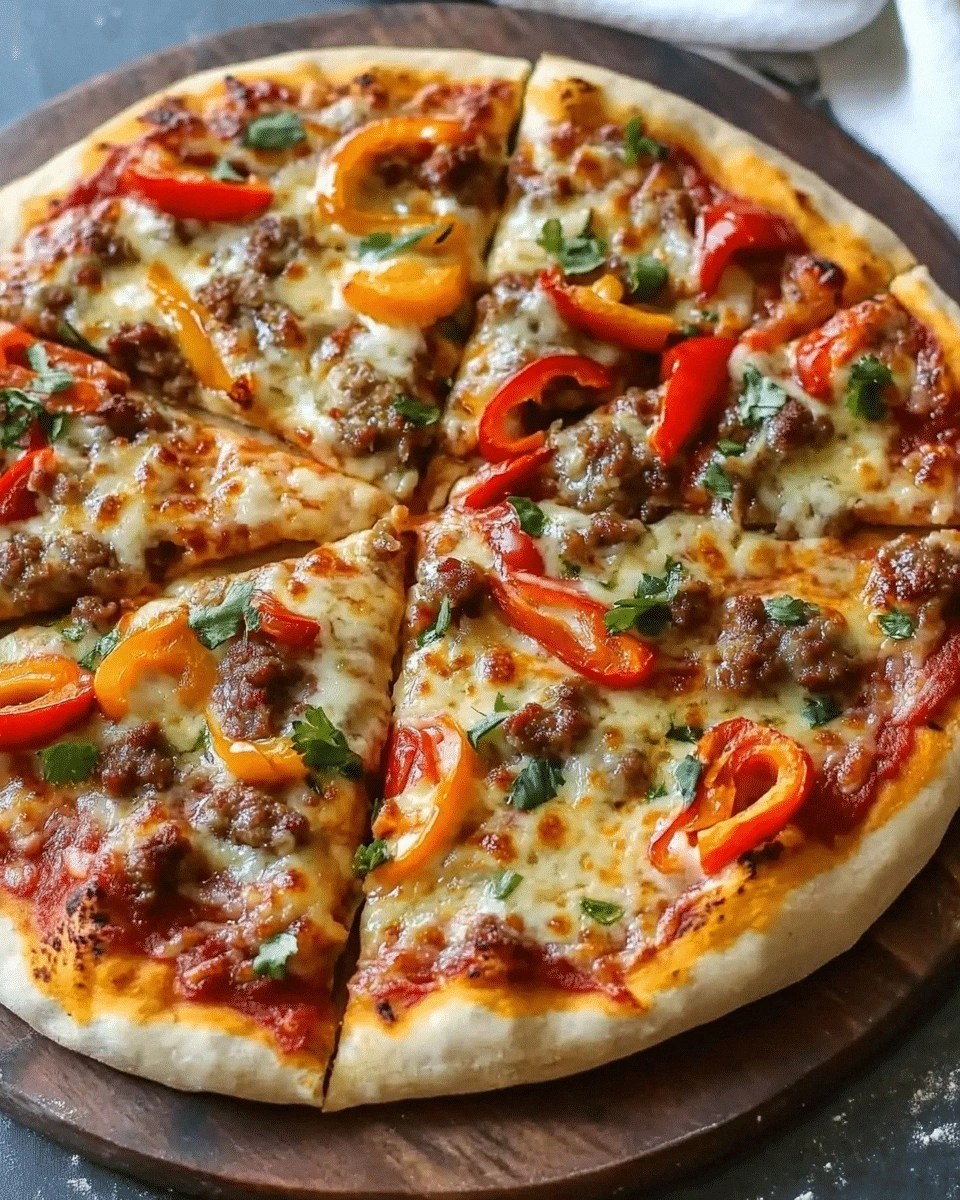
- Sprinkle shredded mozzarella evenly over the sauce, then add the roasted peppers, onions, and cooked sausage. Finish with a generous sprinkle of grated Parmesan and a light drizzle of olive oil. If you like, add a pinch of crushed red pepper flakes for extra heat. The pizza should look like a colorful mosaic, ready to be baked to perfection.
- Slide the parchment paper and pizza onto the preheated pizza stone or inverted baking sheet. Bake for 12-15 minutes, or until the crust is golden brown and the cheese is bubbly and slightly browned. The edges should be crisp, with a slight char that adds depth of flavor.
- Remove the pizza from the oven and let it rest for 3-4 minutes. This resting period allows the cheese to set slightly, making slicing easier. While it rests, sprinkle fresh basil leaves and a final drizzle of olive oil. The basil adds a fresh, aromatic note that cuts through the richness.
- Slice the pizza into wedges, serve hot, and watch as the steam rises in a cloud of savory aroma. Pair with a crisp green salad or a chilled glass of red wine to balance the heat. Each bite should deliver a harmonious blend of textures and flavors, leaving you craving another slice.
- If you’re feeling adventurous, top the pizza with a handful of fresh arugula before serving for a peppery crunch that contrasts with the warm cheese. Alternatively, sprinkle a pinch of smoked paprika for an earthy undertone. The key is to let your creativity guide you while staying true to the core flavors.
That's it — you did it. But hold on, I've got a few more tricks that'll take this to another level…
Insider Tricks for Flawless Results
The Temperature Rule Nobody Follows
Many cooks think a lower oven temperature is safer for a pizza, but the truth is a hot oven is your best friend. Baking at 475°F (245°C) creates a blistered crust that’s both crisp and chewy. If your oven tends to run hot, use a pizza stone to moderate the heat. This trick keeps the base from burning while the toppings cook evenly. I once tried a lower temperature and the pizza came out soggy; the lesson? Heat is king.
Why Your Nose Knows Best
Before you even open the oven door, listen for the first crackle of the crust. That audible cue means the bottom is perfectly crisp. If you’re unsure, use a pizza peel to lift the pizza and check the color of the edges. A golden hue indicates readiness. I’ve learned that timing isn’t just about minutes; it’s about the aroma and sound that signal perfection.
The 5-Minute Rest That Changes Everything
Letting the pizza rest for 3-4 minutes after baking is a game‑changer. The cheese sets, preventing it from sliding off the slice. It also allows the flavors to meld, creating a richer taste profile. Skip this step and you’ll end up with a gooey mess. I’ve seen this happen when a friend rushed to eat straight from the oven; the result was a sad, melted pizza.
Use a Pizza Stone or Steel for Crust Perfection
A pizza stone or steel absorbs heat and transfers it evenly to the dough. This results in a crust that is evenly browned and crispy on the bottom. If you don’t have a stone, an inverted baking sheet works well. Just preheat it for at least 20 minutes before baking. This ensures the bottom doesn’t stay soggy.
Don’t Forget the Final Drizzle
Right after removing the pizza from the oven, drizzle a high‑quality olive oil over the top. This adds a glossy finish and a peppery aroma. The oil also keeps the cheese from drying out as the pizza cools. I swear by this trick; it transforms a good pizza into a great one.
Creative Twists and Variations
This recipe is a playground. Here are some of my favorite ways to switch things up:
Smoky Chipotle Twist
Swap the crushed red pepper flakes for chipotle powder and add a splash of smoky chipotle sauce. The result is a deep, smoky heat that pairs beautifully with the sausage. This version is perfect for a fall gathering when you want a richer, earthier flavor.
Sweet Pineapple and Jalapeño
Introduce pineapple chunks and thin jalapeño slices for a sweet‑spicy contrast. The pineapple’s natural sugars caramelize during baking, while the jalapeños add a fresh heat. This combination is a crowd‑pleaser for summer parties.
White Garlic Parmesan Pizza
Replace the tomato sauce with a white garlic sauce made from butter, garlic, and cream. Add a generous amount of Parmesan and a sprinkle of parsley. This indulgent variation is a hit for those who love a rich, creamy pizza.
Vegan Delight
Use a plant‑based sausage seasoned with fennel and paprika, and swap the cheese for a vegan mozzarella alternative. The flavors remain robust, and the texture stays satisfying. This version is great for plant‑based diners who crave a hearty pizza.
Breakfast Pizza
Top the pizza with scrambled eggs, bacon bits, and a drizzle of hot sauce. Bake until the eggs are set and the cheese melts. This breakfast‑style pizza is a fun twist that turns brunch into a pizza‑filled adventure.
Herb‑Infused Mediterranean
Replace the sausage with lamb or beef seasoned with oregano, rosemary, and thyme. Add sun‑dried tomatoes and olives. Finish with a sprinkle of feta cheese for a Mediterranean flair. This variation brings a different cultural touch to the classic pizza.
Storing and Bringing It Back to Life
Fridge Storage
Let the pizza cool completely before wrapping it tightly in foil or placing it in an airtight container. Store in the refrigerator for up to 3 days. The crust may soften slightly, but the flavors will remain intact. For a quick snack, reheat in a toaster oven at 350°F (175°C) for 5 minutes.
Freezer Friendly
Wrap the pizza individually in parchment paper and then in foil to prevent freezer burn. Label with the date and freeze for up to 2 months. To thaw, leave it at room temperature for 30 minutes or microwave on the defrost setting for 2 minutes.
Best Reheating Method
Preheat your oven to 375°F (190°C). Place the pizza on a baking sheet and heat for 10 minutes, or until the cheese is bubbly again. Add a splash of water to the bottom of the sheet to create steam, keeping the crust from drying out. This trick brings the pizza back to its original crispness.