Picture this: a kitchen that smells like a sushi bar, a sizzling pan, and the faint scent of soy sauce dancing through the air. I was halfway through a frantic weeknight scramble when a friend dared me to whip up a “quick teriyaki salmon” that would make even the most seasoned chef swoon. I grabbed a salmon fillet, a splash of soy, and an avocado that looked like a green marble and decided that this was my culinary epiphany. That moment was a kitchen disaster turned triumph, and it turned out that a simple, bold sauce can elevate an ordinary dinner into a showstopper. I’m about to walk you through every single step, and by the end, you’ll wonder how you ever made it any other way.
If you’ve ever tried a teriyaki glaze that tasted like cardboard, you know the stakes are high. The sauce in this recipe coats the salmon like velvet, then caramelizes to a glossy finish that sings with umami. The avocado adds a buttery contrast that melts into the rice, creating a creamy, silky texture that’s almost too good to bite. The crunch of toasted sesame seeds and the sharp bite of fresh cucumber give each bite a satisfying pop that keeps you coming back for more. This isn’t just another salmon dish; it’s a flavor orchestra that plays a hit on every palate.
Let’s talk about why this version stands out. First, the balance of sweet and savory is razor‑sharp, thanks to the perfect ratio of mirin, soy, and sugar. Second, the salmon is pan‑seared to a crispy edge that shatters like thin ice, then finished in the oven for a tender center. Third, the avocado isn’t just a garnish; it’s a creamy, nutrient‑dense partner that balances the dish’s richness. Fourth, the rice is seasoned with rice vinegar and a touch of sesame oil, giving it a subtle tang and nutty aroma. Fifth, the dish is built for speed—under 45 minutes from prep to plate. Finally, the assembly is a visual feast, layering color and texture that makes Instagram jealous.
And here’s the kicker: I’ve discovered a trick that turns a standard teriyaki sauce into a glossy, caramelized glaze in half the time. By adding a splash of honey in the last minute of simmering, the glaze thickens and the salmon gets that irresistible sheen. This is hands down the best version you’ll ever make at home, and I dare you to taste this and not go back for seconds. If you’re ready for the game‑changer, keep reading—this next part is pure magic.
What Makes This Version Stand Out
- Flavor: The sauce’s sweet‑savory profile is intensified by mirin’s subtle sweetness and a dash of honey, creating a glaze that’s both glossy and deeply satisfying.
- Texture: The salmon’s exterior is blistered to a crisp, yet the inside stays moist, thanks to a precise sear before oven finish.
- Visual Appeal: Layers of avocado, rice, and sesame seeds make each bite a color palette that’s as pleasing to the eyes as it is to the taste buds.
- Time Efficiency: The entire dish can be assembled in 15 minutes, cooked in 30, making it a perfect weekday win.
- Ingredient Quality: Using fresh, high‑quality salmon and ripe avocado elevates the dish from ordinary to extraordinary.
- Make‑Ahead Friendly: The sauce can be prepared in advance, and the salmon can be cooked ahead and reheated without losing flavor.
- Adaptability: The recipe’s core can be swapped for tofu or shrimp, making it a versatile base for many dinner ideas.
- Health Conscious: With lean protein, healthy fats, and complex carbs, this dish hits the sweet spot of a balanced meal.
Inside the Ingredient List
The Flavor Base
The sauce is the heart of this dish, marrying soy sauce, mirin, sugar, sesame oil, and a whisper of honey. Each component plays a role: soy brings depth, mirin adds subtle sweetness, sugar caramelizes, sesame oil imparts nuttiness, and honey gives that glossy sheen. Skipping any of these will flatten the flavor, so keep them all in the mix. For a low‑sodium version, use a light soy sauce, but watch the sugar to maintain balance.
The Texture Crew
The salmon fillets are the main protein, while the rice provides the comforting base. The avocado offers creamy richness, and cucumber adds a refreshing crunch. Sesame seeds contribute a nutty bite, and scallions bring a sharp, aromatic finish. Each element is carefully measured to create a harmonious mouthfeel; altering the ratios will shift the overall experience.
The Unexpected Star
The nori, shredded into fine strands, adds umami depth and a subtle sea‑salt flavor that lifts the entire dish. Though it’s optional, the nori’s texture contrasts beautifully with the silky avocado and crisp rice. If you’re not a fan of seaweed, a sprinkle of toasted sesame or a dash of chili flakes can serve as a suitable substitute.
The Final Flourish
Rice vinegar is the secret to a bright, tangy finish that cuts through the richness of the salmon and avocado. It also helps to prevent the rice from becoming mushy. A pinch of chili flakes introduces a gentle heat that balances the sweetness of the glaze. These finishing touches transform a simple meal into an unforgettable experience.
Everything’s prepped? Good. Let’s get into the real action, where the magic happens and the flavors truly dance.
The Method — Step by Step
- Preheat your oven to 400°F (200°C). Pat each salmon fillet dry with paper towels to ensure a crisp sear. Season both sides with salt and pepper, then set aside. This step locks in moisture and gives the skin a golden finish.
- In a small saucepan, combine soy sauce, mirin, sugar, sesame oil, and a splash of honey. Bring to a gentle simmer over medium heat, stirring until the sugar dissolves. Let it reduce for 5 minutes until slightly thickened; the glaze should coat the back of a spoon.
- Heat a skillet over medium‑high heat and add a drizzle of vegetable oil. Place the salmon skin side down and sear for 3–4 minutes until the skin is crisp and releases easily from the pan. Flip and sear the other side for 2 minutes.
- Brush the glaze generously over the salmon, then transfer the pan to the preheated oven. Bake for 7–9 minutes, or until the internal temperature reaches 145°F (63°C). The glaze will caramelize into a glossy sheen.
- While the salmon finishes, toss the cooked rice with rice vinegar, sesame oil, and a pinch of salt. Spread the rice onto a serving platter, creating an even bed. The vinegar brightens the grains and prevents clumping.
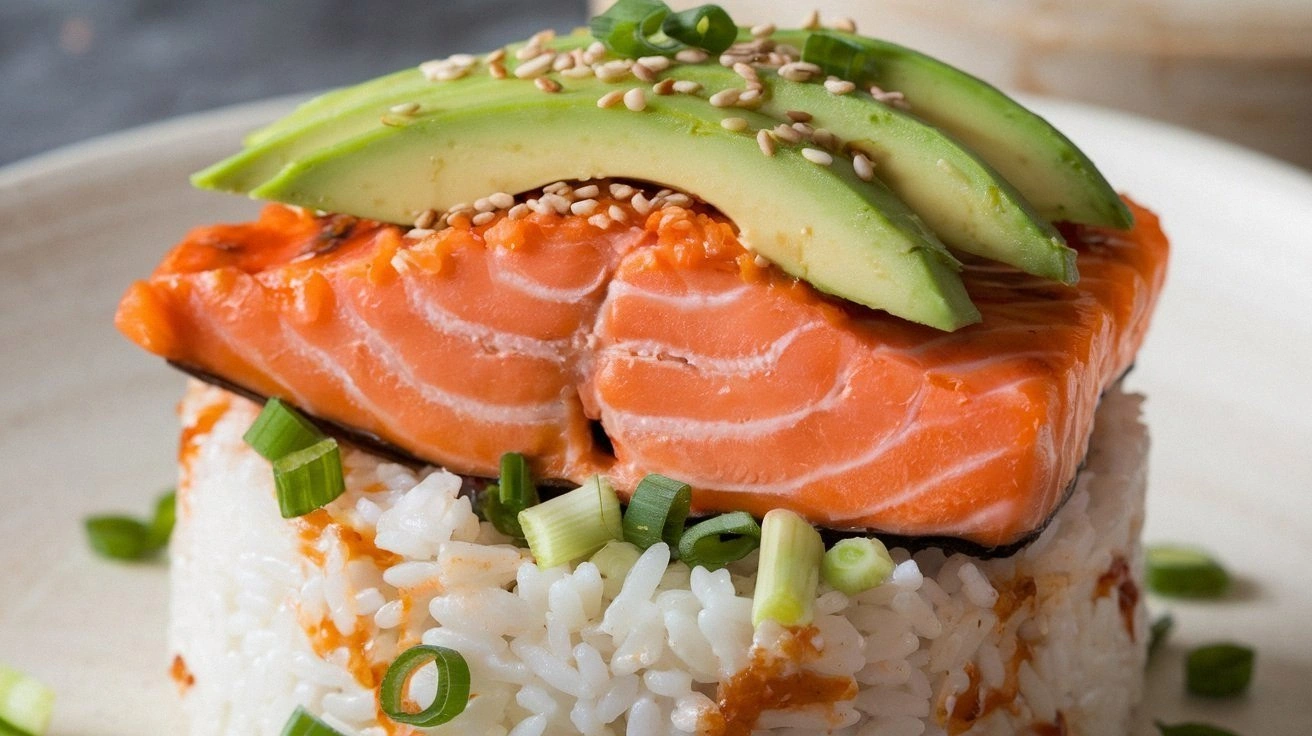
- Arrange the avocado slices on top of the rice, then place the glazed salmon fillets over the avocado. This layering ensures every bite is a balance of textures and flavors.
- Scatter diced cucumber, sliced scallions, toasted sesame seeds, and shredded nori over the dish. Drizzle any remaining glaze and a few drops of rice vinegar for an extra burst of flavor. The final assembly should look like a rainbow of colors.
- Serve immediately, allowing the heat from the salmon to slightly steam the rice and avocado. If you’re plating for a crowd, keep the dish warm in a low‑heat oven or on a warm plate until ready to serve. This ensures the salmon stays moist and the rice remains fluffy.
That’s it — you did it. But hold on, I’ve got a few more tricks that will elevate this dish from great to unforgettable. These insider tips will help you master the nuances that separate a good meal from a legendary one.
Insider Tricks for Flawless Results
The Temperature Rule Nobody Follows
Many cooks skip the sear entirely, but a high‑heat pan locks in juices and creates a caramelized crust that’s essential for teriyaki salmon. Keep the skillet hot until the oil shimmers, and use a thermometer if you’re a precision person. I once left the salmon on low heat and ended up with a soggy bite that made me rethink my technique.
Why Your Nose Knows Best
Before you pour the glaze, inhale deeply; the aroma should smell like toasted sesame and sweet soy. If it feels flat, let it simmer a bit longer to intensify. Smell is a reliable indicator of readiness, and it’s easier to adjust than taste alone.
The 5‑Minute Rest That Changes Everything
Let the salmon rest for five minutes after it leaves the oven. This allows the juices to redistribute, keeping the fillet moist. The resting period also lets the glaze set, creating a glossy finish that’s hard to resist.
Layering Like a Pro
When assembling, start with a base of rice, then layer avocado, salmon, and finally the garnishes. This ensures the sauce doesn’t soak through the rice and keeps each bite distinct. It also makes the dish look more polished.
The Quick Chill Trick
If you’re preparing ahead, chill the salmon in a sealed container before searing. This prevents the fillet from becoming rubbery during the sear. A quick dip in cold water before cooking also helps maintain firmness.
Creative Twists and Variations
Spicy Sriracha Kick
Swap the chili flakes for a spoonful of sriracha in the glaze. The heat pairs beautifully with the sweetness, giving the dish a bold, fiery edge. This version is perfect for those who love a little burn.
Miso‑Infused Depth
Add a teaspoon of white miso to the glaze for a richer umami profile. Miso also thickens the sauce, creating a silkier coating on the salmon. This twist turns the dish into a gourmet experience.
Tropical Pineapple Twist
Incorporate diced pineapple into the rice for a sweet, tropical flair. The fruit’s acidity balances the savory glaze and adds a juicy burst. This variation is ideal for summer gatherings.
Vegetarian Tofu Version
Replace salmon with firm tofu, pan‑fried until golden before glazing. The tofu absorbs the sauce, delivering the same umami punch. This plant‑based option keeps the dish hearty and satisfying.
Citrus Brightness
Finish the dish with a squeeze of fresh lime or yuzu. The citrus cut through the richness and adds a refreshing zing. This subtle addition brightens the overall flavor profile.
Herb‑Infused Rice
Stir chopped cilantro or basil into the rice before serving. The herbs impart a fresh, aromatic layer that complements the avocado. This variation is a great way to add a pop of green.
Storing and Bringing It Back to Life
Fridge Storage
Store the assembled dish in an airtight container for up to 2 days. Keep the glaze separate if possible, as it can make the rice soggy. Reheat gently on the stovetop or in a microwave with a splash of water to revive moisture.
Freezer Friendly
Freeze the salmon and rice separately to maintain texture. Wrap each component tightly in plastic wrap, then place in a freezer bag. When ready to serve, thaw overnight in the refrigerator and reheat as described.
Best Reheating Method
Reheat the salmon in a skillet over medium heat until warmed through; this preserves the crust. Add a small amount of water or broth to the pan to keep the salmon from drying out. Finish with a quick drizzle of glaze to restore its glossy finish.