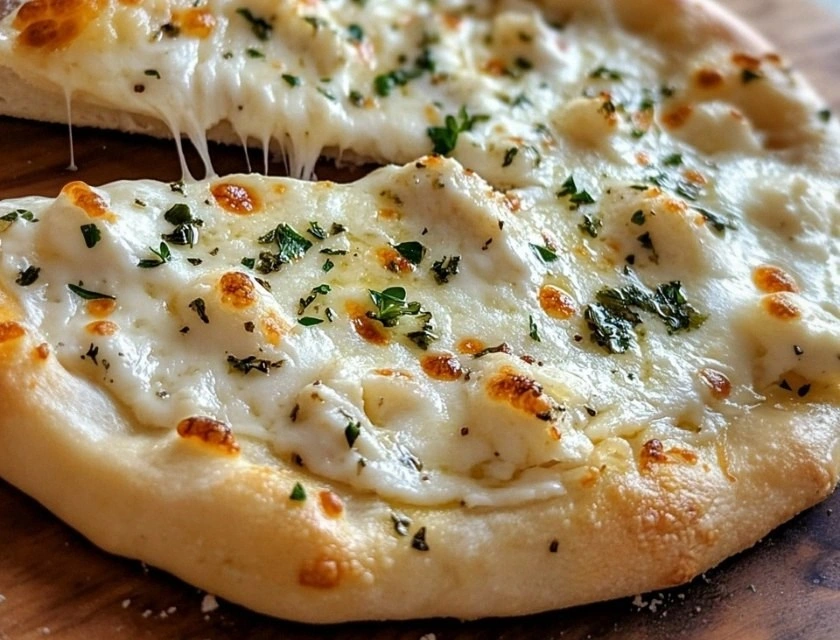
I still remember the night I accidentally created the most addictive white pizza of my life. It was supposed to be a quick dinner after a brutal workday, but my tomato sauce had mysteriously disappeared (roommate problems, am I right?). Standing there with a naked pizza dough and a hungry stomach, I stared at a bulb of garlic like it owed me rent money. Twenty-five minutes later, I pulled out a golden-crusted masterpiece that made my neighbor knock on my door asking if I was running an underground pizzeria. The smell alone could solve world peace — buttery garlic, nutty parmesan, and those crispy edges that shatter like thin ice under your teeth.
Here's the thing about white pizza: most versions taste like someone forgot to add the flavor. They're bland, greasy, or worse — they taste like you're eating fancy cardboard with cheese on top. Not this one. This white pizza with garlic pizza sauce is what happens when you treat garlic like the main character it deserves to be. We're talking about a sauce that coats your tongue like velvet, cheese that stretches for days, and a crust that crackles with every bite. I dare you to taste this and not go back for thirds (yes, thirds — I said what I said).
Picture yourself pulling this out of the oven, the whole kitchen smelling like you've been transported to a tiny trattoria in Rome where nonnas argue about the perfect amount of garlic. The steam rises in lazy spirals, carrying that intoxicating aroma of roasted garlic, bubbling mozzarella, and those little charred spots that make food photographers weep with joy. Your neighbors will hate you because their takeout will taste like sadness in comparison. I've had three different people try to bribe me for this recipe, including one guy who offered to detail my car. I turned him down — some things are too sacred for barter.
What makes this version different? We're building layers of flavor like we're constructing the world's most delicious lasagna, but flat. The garlic gets slow-roasted until it's jammy and sweet, then we create a béchamel-style base that would make French chefs nod approvingly. Most recipes get this completely wrong by just throwing raw garlic on dough with cheese and calling it a day. That's not white pizza — that's a cry for help. Stay with me here — this is worth it. Let me walk you through every single step — by the end, you'll wonder how you ever made it any other way.
What Makes This Version Stand Out
Garlic-Forward: We're using an entire head of garlic, roasted until it's caramelized and spreadable. This isn't some timid whisper of garlic — this is a full conversation where garlic does most of the talking. The roasting process transforms harsh raw garlic into something sweet and complex that makes your kitchen smell like heaven's waiting room.
Silky Sauce Base: Instead of just olive oil and hope, we're creating a proper garlic cream sauce that clings to every crevice of the dough. It's like the difference between wearing a tailored suit versus wrapping yourself in a bedsheet. This sauce has body, personality, and the kind of richness that makes you close your eyes involuntarily.
Three-Cheese Strategy: Mozzarella for stretch, ricotta for clouds of creaminess, and parmesan for that umami punch that makes your taste buds do a happy dance. Each cheese has a job, and they work together like a well-rehearsed boy band — individually talented, but magical as a group.
Crispy-Chewy Crust: We're preheating a baking steel or stone until it's screaming hot, creating those leopard spots that make pizza nerds lose their minds. The crust puffs up like it's showing off, with a bottom that's crisp enough to make a satisfying crunch but still pliable enough to fold.
Make-Ahead Magic: The garlic sauce keeps for a week in the fridge and actually gets better as the flavors meld. I make double batches because my future self deserves nice things. You can even freeze the sauce in ice cube trays for emergency pizza situations (which, let's be honest, happen more than they should).
Crowd-Pleasing Power: I've served this to picky kids, foodie friends, and that one uncle who claims nothing's as good as his own cooking. They all surrender their skepticism after one bite. It's vegetarian without trying to be healthy, indulgent without being overwhelming, and sophisticated enough for date night but approachable enough for a Tuesday.
Inside the Ingredient List
The Flavor Base
The garlic is obviously the star here, but don't underestimate the supporting cast. That whole head of garlic needs to be the freshest you can find — look for bulbs that feel heavy and firm, with papery skins that haven't started sprouting green shoots. When garlic gets old, it develops a bitter, aggressive flavor that'll ruin our whole vibe. We're roasting it low and slow until each clove transforms into spreadable candy, and this process takes about 40 minutes. Your patience will be rewarded with something that tastes more like garlic honey than the sharp stuff that keeps vampires away.
Butter forms the backbone of our sauce, and please, I'm begging you, use the good stuff. European-style butter with higher fat content makes a sauce that's silkier than a politician's promise. The milk solids in the butter will brown slightly as we cook, adding nutty notes that make people ask "what's that incredible flavor?" Cheap butter tastes flat and one-dimensional, like listening to music through phone speakers versus a proper sound system.
Heavy cream isn't just being indulgent — it's necessary for the right consistency. The fat content prevents the sauce from breaking when we heat it on the pizza, and it creates those gorgeous bubbles that brown just so in the oven. I've tried with half-and-half in a moment of waistline panic, and the result was a sad, watery mess that made me question my life choices. Use the real thing or don't bother making this recipe.
The Texture Crew
Mozzarella seems straightforward until you realize there are like seventeen different types at the store. For white pizza, you want the low-moisture whole milk variety, not the fresh stuff floating in water. Fresh mozzarella has too much liquid and will turn your beautiful pizza into a swimming pool. Grate it yourself from a block — the pre-shredded stuff is coated with cellulose that prevents proper melting and leaves you with a slightly gritty texture.
Ricotta needs to be drained unless you enjoy soggy pizza centers. Line a fine-mesh strainer with cheesecloth, plop in your ricotta, and let it hang out in the fridge for an hour. You'll be amazed how much liquid drains out, and your pizza will thank you by staying crisp instead of turning into a dairy swamp. Whole milk ricotta is worth the extra calories — the low-fat version tastes like disappointment and has the texture of wall spackle.
Parmigiano-Reggiano is non-negotiable here. That stuff in the green can isn't even invited to this party. Real parmesan adds crystalline umami bombs throughout the pizza, little hits of savory complexity that make people close their eyes and make involuntary happy sounds. Grate it fresh on the finest side of your grater — you want it to melt into the sauce, not sit on top like cheese gravel.
The Unexpected Star
Nutmem might seem weird in pizza, but trust the process here. Just a whisper — like an eighth of a teaspoon — adds this mysterious warmth that makes people ask what your secret ingredient is. It's not enough to taste like dessert, just enough to make everything else taste more like itself. I discovered this trick from an Italian grandmother who swore by it, and she was right about everything else, so I listened.
Lemon zest is my other sneaky addition. Just the tiniest bit brightens all the rich dairy and prevents the whole thing from feeling like you're eating a cheese comforter. Use a microplane and go easy — we're talking about one pass across the lemon, not a full zesting assault. This little pop of citrus makes the garlic sing and keeps your palate interested through the entire slice.
The Final Flourish
Fresh herbs make the difference between good and unforgettable. Thyme and garlic are best friends who finish each other's sentences, so a few leaves scattered over the top before baking add another layer of aromatic magic. Save the fresh basil for after the pizza comes out of the oven — cooking basil turns it black and bitter, like it's mad at you for ruining its pretty green color.
Good olive oil for finishing is worth its weight in gold. A light drizzle of something peppery and green right before serving adds a fruity note that makes all the dairy sit up and pay attention. Don't use your everyday cooking oil here — this is the moment for the fancy bottle you've been saving for special occasions. If perfectly roasted garlic pizza isn't a special occasion, I don't know what is.
Everything's prepped? Good. Let's get into the real action...
The Method — Step by Step
- Start by roasting your garlic because this takes the longest and patience is a virtue (or so I'm told). Preheat your oven to 375°F, slice the top off the whole garlic bulb to expose the cloves, drizzle with olive oil, and wrap tightly in foil. Roast for 40 minutes until the cloves are caramelized and spreadable like butter. Your kitchen will start smelling like you've been cooking all day, which is technically true if you count waiting as cooking. I'll be honest — I ate half the batch before anyone else got to try it, standing over the sink like a garlic vampire.
- While the garlic roasts, make your pizza dough if you're feeling ambitious, or take the store-bought stuff out of the fridge to come to room temperature. Cold dough fights back like a toddler at bedtime, but room temperature dough stretches like a yoga instructor on vacation. If you're using a pizza stone or steel (and you should be), put it in the oven now so it can heat up with the oven. This is the difference between a pizza that takes 12 minutes and one that takes 8 — those extra 4 minutes matter when you're hungry and the smell is making you consider eating raw dough.
- Okay, ready for the game-changer? Once your garlic is cool enough to handle, squeeze out all those jammy cloves into a small saucepan. Add your butter and melt over medium heat, stirring constantly as the garlic breaks down into the fat. This is the moment of truth — you want to mash the garlic against the sides of the pan until it practically dissolves. The smell will make you consider abandoning the pizza entirely and just drinking this sauce with a straw. Resist the urge, though it's a noble impulse.
- Once the butter is melted and the garlic is incorporated, pour in your heavy cream and whisk like your life depends on it. Bring this mixture to a gentle simmer — not a rolling boil, just enough to see tiny bubbles around the edges. This is where the sauce thickens and transforms from garlicky cream into something worthy of a white pizza throne. Add your salt, pepper, and that whisper of nutmeg. The sauce should coat the back of a spoon like liquid velvet.
- Now crank your oven up as high as it will go — usually 500°F or 550°F if you're lucky. This is where most home pizza makers get nervous, but trust me, your oven can handle it. Professional pizza ovens run at 800-900°F, so we're being conservative here. Let the stone heat for at least 30 minutes after it reaches temperature. That sizzle when it hits the pan? Absolute perfection.
- Stretch your dough on a well-floured surface, working from the center out. Don't use a rolling pin unless you want a dense, sad crust that tastes like regret. Use your fingertips to press from the middle toward the edges, then pick it up and let gravity do the work as you rotate it. If you get holes, just pinch them back together — pizza dough is forgiving like that. Aim for a 12-inch round, but let's be real, irregular shapes taste better anyway.
- Spread a thin layer of your garlic sauce over the dough, leaving a 1/2-inch border for the crust. Resist the urge to drown it — too much sauce makes for a soggy pizza that won't support its cheese load. Think of it like applying perfume: you want people to notice when you walk by, not when you walk into the room. That sizzle when it hits the pan? Absolute perfection.
- Sprinkle your drained ricotta in small dollops across the sauce — think of it like clouds in a garlic sky. Add your mozzarella (grated, remember?), then shower the whole thing with parmesan. The three cheeses will melt together into something that makes grown adults speak in food gibberish. "Mmm, this is so... cheese... good... can't... words."
- Slide your pizza onto the hot stone (use parchment paper if you're not confident with the peel) and bake for 7-9 minutes. Don't open the door to peek for at least 5 minutes — you want that initial blast of heat to create the perfect rise. When it's done, the crust should have leopard spots underneath, the cheese should be bubbling like a jacuzzi, and the edges should be golden brown. If you've ever struggled with this, you're not alone — and I've got the fix: make sure your stone is properly preheated and your oven is clean (old food residue can affect heat distribution).
- Let it rest for exactly 3 minutes — no more, no less. This is the hardest part of the entire recipe, but it's crucial. The cheese needs to set slightly so it doesn't slide off when you slice it. Drizzle with good olive oil, add fresh basil if you're feeling fancy, and prepare for the best white pizza of your life. That first bite? Pure magic.
That's it — you did it. But hold on, I've got a few more tricks that'll take this to another level...
Insider Tricks for Flawless Results
The Temperature Rule Nobody Follows
Here's what separates good home pizza from restaurant-quality: temperature management. Your dough should be room temperature, your sauce should be warm but not hot, and your cheese should be cold from the fridge. Cold cheese melts slower, giving the crust time to cook through without burning the toppings. I know it seems backwards, but try it once and you'll become a convert. A friend tried skipping this step once — let's just say it didn't end well. The cheese melted too fast, creating a greasy pool that soaked through the crust. We still ate it, but we also learned a valuable lesson about thermodynamics and hubris.
Why Your Nose Knows Best
Your nose is the most underutilized kitchen tool. When the garlic is perfectly roasted, your kitchen will smell like you've been transported to a tiny trattoria where nonnas argue about the perfect amount of garlic. When the cheese is properly melted, you'll smell toasted dairy with nutty undertones. If you smell burning, you're about 30 seconds away from disaster. That first whiff of properly caramelized garlic is your cue that magic is happening. Don't rely on timers alone — your nose knows when things are perfectly done.
The 5-Minute Rest That Changes Everything
I know you're hungry. I know the pizza is calling your name like a siren song of melted cheese and roasted garlic. But those five minutes of resting time are non-negotiable. During this brief pause, the cheese sets slightly, the sauce thickens as it cools, and the crust finishes its final crisping. Cut too early and you'll have cheese lava flowing everywhere like a dairy volcano. Wait too long and you've got cold pizza (which, let's be honest, is still pretty great). The sweet spot is exactly five minutes — set a timer if you have to. Use this time to pour yourself a glass of wine, plate some salad, or just stare lovingly at your creation.
The Cutting Technique That Prevents Tragedy
Use kitchen shears instead of a pizza wheel. I discovered this trick from a Roman pizzaiolo who looked at my wheel like I'd suggested using a chainsaw. Scissors give you clean cuts without dragging cheese and toppings around like a bad breakup. Rock them through the crust, wipe between cuts for presentation points, and you'll have perfect slices that look like they came from a proper pizzeria. Plus, you can cut directly in the pan without scratching anything. My pizza wheel now lives in the drawer of forgotten kitchen gadgets, next to the avocado slicer and that weird apple corer.
The Storage Hack That Saves Leftovers
If you somehow have leftovers (and that's a big if), store them in a paper towel-lined container. The paper towel absorbs excess moisture, preventing the crust from getting soggy. Reheat in a dry skillet over medium heat for 3-4 minutes, covered with a lid. This method revives the crust better than any oven or microwave ever could. The bottom gets crispy again, the cheese melts perfectly, and it's almost as good as fresh. Almost. Nothing beats fresh pizza, but this method comes surprisingly close.
Creative Twists and Variations
This recipe is a playground. Here are some of my favorite ways to switch things up:
The Mediterranean Escape
Add chopped artichoke hearts, kalamata olives, and sun-dried tomatoes to the basic white pizza formula. The briny olives cut through the rich garlic cream like a zesty vacation in Greece. Drain everything well or you'll have a watery mess that tastes like the bottom of a Greek salad bowl. Top with fresh oregano after baking for that authentic taverna vibe. This version makes people speak in fake accents and plan imaginary trips to Santorini.
The Mushroom Lover's Dream
Sauté a mix of mushrooms — cremini, shiitake, and oyster — in butter until they're golden and concentrated. Scatter them over the garlic sauce before adding the cheese. The earthiness of mushrooms plays beautifully with the sweet roasted garlic, creating a forest-floor flavor profile that's surprisingly elegant. Add a few drops of truffle oil if you're feeling fancy (or if you want to clear a room — truffle oil is divisive like pineapple on pizza).
The Spicy Romance
Infuse your cream with red pepper flakes while making the sauce, then add fresh sliced jalapeños on top before baking. The cool dairy soothes the heat, creating a push-pull effect that keeps you coming back for more. It's like a first kiss that leaves you slightly breathless but wanting another. If you really want to turn up the heat, add a drizzle of hot honey after baking — sweet, spicy, and completely addictive.
The Breakfast Pizza Plot Twist
Crack two eggs onto the pizza during the last 3 minutes of baking. The whites set while the yolks stay runny, creating built-in sauce packets when you cut into them. Add some crispy bacon bits (cook them separately first) and you've got breakfast that'll make you cancel brunch plans. This is weekend morning food that requires no sharing and pairs beautifully with strong coffee and zero regrets.
The White Truffle Situation
Replace half the parmesan with white truffle cheese if you can find it, or add a few drops of white truffle oil to the finished pizza. This is fancy-pants pizza that makes people speak in hushed tones about your culinary prowess. Serve with champagne and pretend you're in a Michelin-starred restaurant instead of your kitchen with mismatched chairs. The garlic provides the base notes while the truffle sings the high notes in this aromatic symphony.
The Veggie-Loaded Compromise
Add thinly sliced zucchini, bell peppers, and red onion on top of the cheese. The vegetables roast in the oven, their natural sweetness concentrating and complementing the garlic cream. This is how you convince yourself that pizza counts as eating vegetables. The key is slicing everything thinly so it cooks quickly and doesn't weigh down the crust like vegetable ballast.
Storing and Bringing It Back to Life
Fridge Storage
Let the pizza cool completely before storing — hot pizza in a container creates condensation, and condensation is the enemy of crispy crust. Cut into slices and layer in an airtight container with parchment paper between slices. It'll keep for up to 4 days, though after day 2 you're entering "desperation pizza" territory. The flavors actually meld beautifully overnight, so day-two pizza has its own charms, like a fine wine or that friend who gets better once you know their backstory.
Freezer Friendly
Freeze individual slices on a baking sheet first, then transfer to freezer bags once solid. This prevents them from becoming a frozen pizza brick that requires an ice pick to separate. Properly frozen, they'll keep for 2-3 months, though let's be honest — if you can keep garlic pizza in your freezer for 3 months without eating it, you have more self-control than I ever will. Label the bags with the date unless you enjoy playing "when did I make this?" roulette.
Best Reheating Method
Skip the microwave unless you enjoy chewy crust and sadness. Instead, heat a dry skillet over medium heat, add your slice, cover with a lid, and heat for 3-4 minutes. The bottom gets crispy again while the steam trapped under the lid gently reheats the toppings. For extra revival, add a tiny splash of water to the pan before covering — it creates steam that brings the cheese back to life without making the crust soggy. This method works so well that I've been known to "accidentally" make extra pizza just for leftovers.